Bedding · The thoughtful sleeper
A First-Time Sleeper’s Guide to Choosing a Topper
A topper can bring a bed closer to the comfort you want—softer, more cushioned, or simply more inviting—without replacing the mattress beneath it. The secret is to know what you’re trying to change. This beginner-friendly guide walks through materials, thickness, fit, care, and the limits of what a topper can do.
Published November 3, 2026
There is an intimate pleasure in making a bed feel exactly right. The sheets are smooth, the pillow settles beneath your head, and the surface welcomes you rather than asking you to adapt to it. When a mattress feels a little too firm, a little too bare, or less comfortable than you remember, a topper may be the considered finishing layer that changes the experience.
But a topper is not a new mattress in miniature. It sits on top of the bed and alters the feel of the surface; it does not replace the support system underneath. That distinction matters. A well-chosen layer can add cushioning or change how pressure is distributed. It cannot reliably correct a mattress that sags, has deep impressions, or no longer supports you evenly. Before comparing materials or thicknesses, begin with the bed you have—and the discomfort you hope to solve.
First, name what feels wrong
“Uncomfortable” is a useful starting point, but it is too broad to guide a purchase. Spend several nights noticing what happens when you lie down and when you wake. Is the surface simply too firm? Do your shoulders or hips feel pressed against it? Does the bed feel uneven, or do you notice a hollow where you tend to sleep? Are you comfortable at first, then too warm later in the night? Each observation points toward a different decision—and sometimes toward a solution other than a topper.
If the mattress is sound but feels harder than you prefer, a cushioning topper may soften the surface. If the surface is lumpy or visibly sagging, adding another layer is unlikely to make the underlying problem disappear. A topper may cover minor irregularities temporarily, but it cannot restore a mattress’s core support. In that situation, assess the mattress, its foundation, and any applicable warranty before investing in an accessory.
Consider the whole sleep setup, too. A mattress placed on an unsuitable or damaged base may feel different from the same mattress on a stable foundation. A protector, pad, fitted sheet, and topper all contribute to the final surface. If your sheets already fit tightly, adding a thick layer may make them pull loose or feel strained. The small details are not small once you are trying to sleep.
A topper, a pad, or a new mattress?
The names can blur together, but the roles are distinct. A topper is generally designed to noticeably change the feel of the sleep surface, often through cushioning or contouring. A mattress pad is usually thinner and may be intended chiefly to protect the mattress or add a modest amount of softness. A protector focuses primarily on shielding the mattress from spills, perspiration, and everyday wear; depending on its construction, it may have little effect on comfort.
These categories are not perfectly standardized, so read the construction and care details rather than relying on the label alone. Look for the stated thickness, materials, attachment method, and whether the item is meant to change comfort, protect the bed, or do both. A quilted pad with a shallow profile is not likely to feel like a substantial foam or wool topper, even if both are described as cushioning layers.
A topper is most promising when the mattress is in good condition and the issue is surface feel. It may be less appropriate when the bed has lost structural support, when you need a different mattress size, or when you are trying to solve a persistent health concern. If pain or disturbed sleep is ongoing, a bedding change is not a substitute for advice from a qualified health professional.
Material sets the mood
The material affects how a topper responds to your body, how quickly it settles, how much it cushions, and how it feels across the night. There is no universally best choice. The right one is the one that suits your preferences, your existing mattress, and the way you sleep.
Memory foam
Memory foam is known for a close, contouring sensation. It can soften the contact points between the body and a firm mattress, which some sleepers find comforting. Different foam formulations vary in density, responsiveness, and feel, so “memory foam” alone does not tell you exactly how a topper will behave. Some people enjoy the enveloping quality; others prefer a surface that feels more buoyant or easier to move across. Check product information for the specific foam construction and any care or ventilation guidance.
Latex
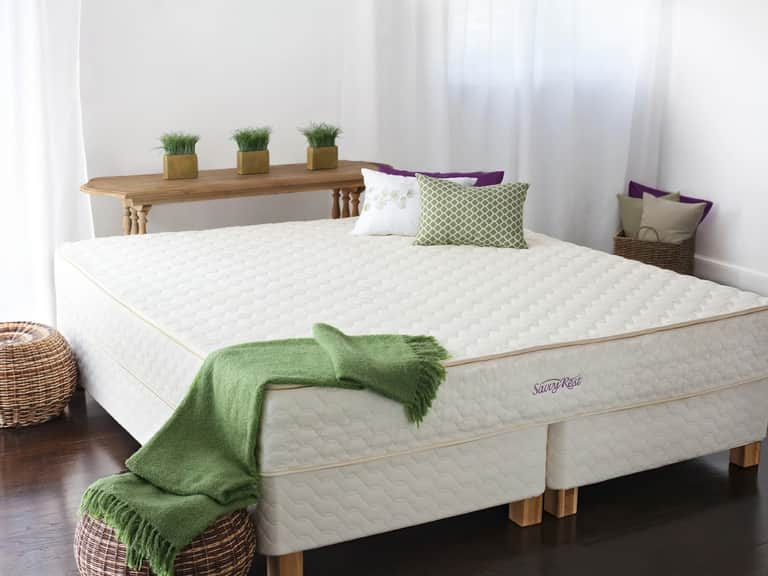
Latex is often described as responsive: rather than slowly settling around the body, it tends to offer a springier, more buoyant feel. That may appeal to sleepers who want cushioning without the sensation of sinking deeply into the bed. Latex products differ in their construction and firmness, so compare the details instead of assuming that every latex layer feels alike. For readers considering the material more broadly, the Savvy Rest Serenity Latex Mattress illustrates how latex can be arranged in layers to create different comfort configurations; it is a mattress, not a topper, and is useful here as an example of the material rather than a substitute recommendation.
Wool
Wool offers a softer, more traditional kind of cushioning, with a distinct textile hand rather than the foam-like contour of memory foam. Its feel and loft depend on how much wool is used and how it is quilted. Wool is also valued for its ability to manage moisture, although individual sleep temperature depends on many factors, including room climate, bedding, and personal preference. A wool layer may compress and settle with use; follow the maker’s care instructions and consider whether that natural evolution suits you.
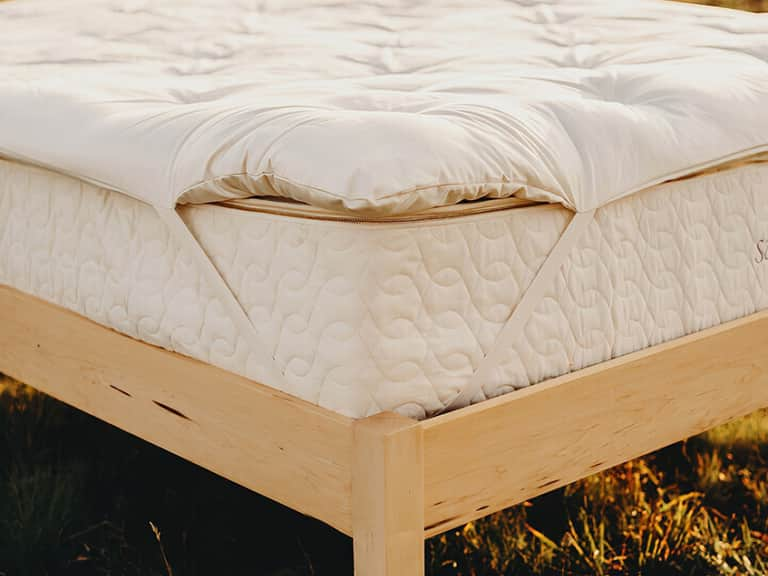
One example is the Savvy Rest Natural Savvy Woolsy Mattress Topper, a wool-filled topper in a quilted organic cotton cover, with corner straps to help secure it. The listed description gives an approximate total height of three inches and recommends adding a mattress pad to protect the topper and mattress. As with any product, check current specifications, fit, and care guidance before deciding whether it suits your bed.
Down, feather, and synthetic fills
Some toppers use down, feathers, or synthetic fibers to create a plush, pillow-like surface. They may feel softer and less structured than foam or latex, with a loft that can shift or compress over time. If you are considering one, check how evenly the fill is distributed, whether it can be laundered, and whether the construction suits any material sensitivities you may have. The ability to wash an item should never be assumed from the fabric or fill alone.
How much thickness is enough?
Thickness is one of the most visible specifications—and one of the easiest to misunderstand. A taller topper does not automatically mean better comfort. A thicker layer can make a substantial change to the surface, but it may also alter the bed height, affect how secure the fitted sheet feels, and create more cushioning than you wanted. A thinner layer can produce a subtler adjustment, particularly when the mattress is already close to your preferred feel.
Think of thickness as the scale of the change, not a simple quality ranking. Ask yourself whether you want a gentle softening or a more pronounced cushion. Then compare that intention with the topper’s material and firmness. A few inches of one material will not necessarily feel like the same thickness of another; density, quilting, resilience, and construction all matter.
If you can, review the topper’s return or trial terms before purchase, and make a note of your current mattress height. After installation, test the full arrangement with the fitted sheet you plan to use. The corners should remain secure, and the sheet should not pull so tightly that it shifts the topper or compresses the surface. If your sheet has a maximum pocket depth, compare that measurement with the combined height of the mattress, topper, and any pad underneath it.
Let sleep position inform the feel
Sleep position can offer a helpful clue, though it cannot dictate a perfect topper choice. Side sleepers often prefer enough cushioning at the shoulder and hip to avoid an overly hard contact point. Back sleepers may look for a balanced surface that feels comfortable without creating the impression of excessive sink. Stomach sleepers often favor a less plush feel, since too much softness may not match their preference for a comparatively level surface.
These are starting points, not rules. Body shape, mattress firmness, temperature preference, and personal comfort all influence the result. If you share a bed, the challenge becomes more nuanced: each person may prefer a different surface feel. A topper changes the shared surface, so consider whether both sleepers want the same adjustment. Where available, clear trial terms can be especially useful when two people are assessing a new feel together.
Rather than shopping for a label such as “side-sleeper topper,” identify the sensation you want. Do you want more softness at the shoulder? Less pressure at the hip? A surface that feels more responsive when you turn? Those questions lead to more meaningful comparisons than a single sleep-position category.
Fit is the quiet essential
Before ordering, measure the mattress. Standard sizes are helpful, but dimensions can vary, particularly with older beds, nonstandard frames, or mattresses designed for a specific base. Match the topper size to the mattress dimensions and check whether the product uses corner straps, a fitted skirt, or another attachment system. A topper that slides during the night can become a daily irritation, however beautiful its materials may be.
Also note the mattress depth and the surface profile. If the bed has a pillow top, a thick mattress encasement, or a protector with a pronounced fit, the topper may sit differently than it would on a simple flat surface. Consider the order of layers recommended by the manufacturer. Some toppers are designed to lie directly on the mattress; others may need a protector or pad above them to guard against stains.
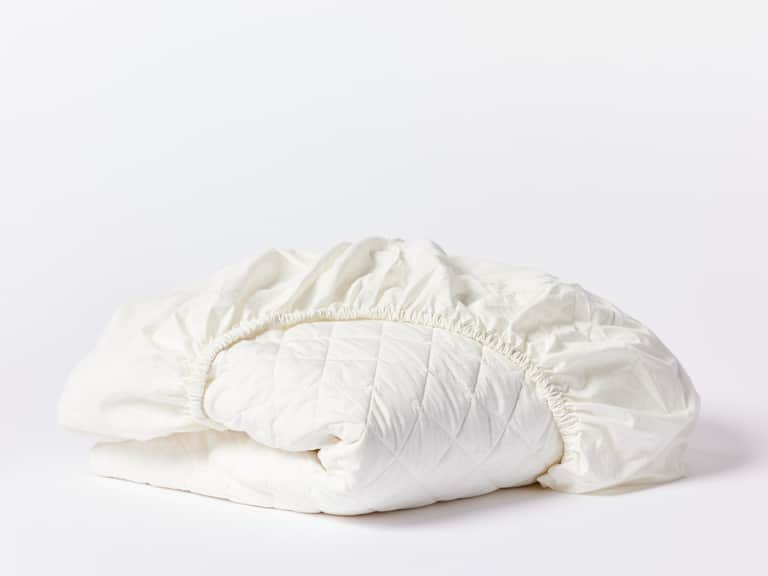
For a protective layer rather than a substantial comfort change, an organic cotton mattress pad may be a useful companion to a topper. The Organic Cotton Mattress Pad is described as a quilted, machine-washable cotton layer with 15-inch deep pockets. Confirm that those pockets suit the combined depth of your bed, and follow the product’s care instructions. Protection can help keep the sleep surface in better condition, but it does not replace the care guidance specific to the topper.
Care, cleaning, and longevity
Care is part of the buying decision, not a footnote for later. Some toppers have removable, washable covers; others require spot cleaning or specialist care. Some materials should not be exposed to excess moisture. Before buying, locate the care instructions and consider whether they fit your household routine. A product that sounds perfect in theory may be less convenient if its upkeep is impractical for you.
Use a protector or pad only when its construction is compatible with the topper and does not interfere with the intended feel. Keep the product’s original instructions accessible, and avoid washing or drying it in a way the manufacturer does not recommend. Regularly check for shifting, unusual lumps, or changes in loft. If a topper is designed to be rotated or aired, follow the stated schedule rather than improvising based on assumptions.
Warranties are worth reading carefully. They can differ in length, coverage, exclusions, and requirements for documenting a problem. A warranty is not necessarily a promise that the topper will maintain an identical feel for its entire term. Compare the written terms with your expectations, and keep proof of purchase and care information in a place you can find later.
A calm checklist before you choose
- Describe the discomfort precisely: too firm, too little cushioning, uneven, or another issue.
- Check the mattress for sagging or damage; a topper cannot restore lost core support.
- Choose a material based on the sensation you prefer: contouring, buoyant, plush, or softly cushioned.
- Treat thickness as a way to estimate the scale of change, not a guarantee of quality.
- Measure the mattress and confirm its size, depth, and compatibility with the topper’s attachment method.
- Check fitted-sheet pocket depth after accounting for every layer on the bed.
- Read cleaning instructions, warranty terms, and any trial or return conditions before ordering.
- If sharing the bed, discuss the desired feel together; a topper affects both sides unless designed otherwise.
The best choice is the one that solves the right problem
Choosing a bed topper can feel like a small decision with surprisingly intimate consequences. It changes the first contact between your body and the bed: the softness beneath a shoulder, the response beneath a turning hip, the texture that greets you at night. But the most elegant solution begins with practical clarity. Understand what is uncomfortable, assess the condition of the mattress, and decide how much change you want.
Then compare materials, thickness, fit, and care as a complete picture. A supple wool layer, a responsive latex surface, or a contouring foam topper each creates a different experience; none is automatically right for every sleeper. Consider your sleeping position, temperature preferences, existing sheets, and household routine, and look beyond headline claims to the construction and care details.
Most of all, keep the topper in its proper role. It is a finishing layer, not a cure for a failing mattress or a guarantee of perfect sleep. Chosen thoughtfully, however, it can make a sound bed feel more personal—an understated adjustment that brings the surface closer to the comfort you were looking for.